

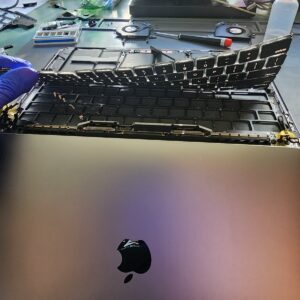
M1 MacBook Pro Keyboard Issues
This week at our Adelaide workshop, we successfully repaired an M1 MacBook Pro that suffered from non-functional keys after a minor liquid spill. Consequently, because these keyboards utilize a capsulated system, we cannot repair individual keys that stop typing. Therefore, we performed a full MacBook Pro A2337 Keyboard Replacement to restore the device to perfect working order.
Accessing the Internals: Logic Board Removal
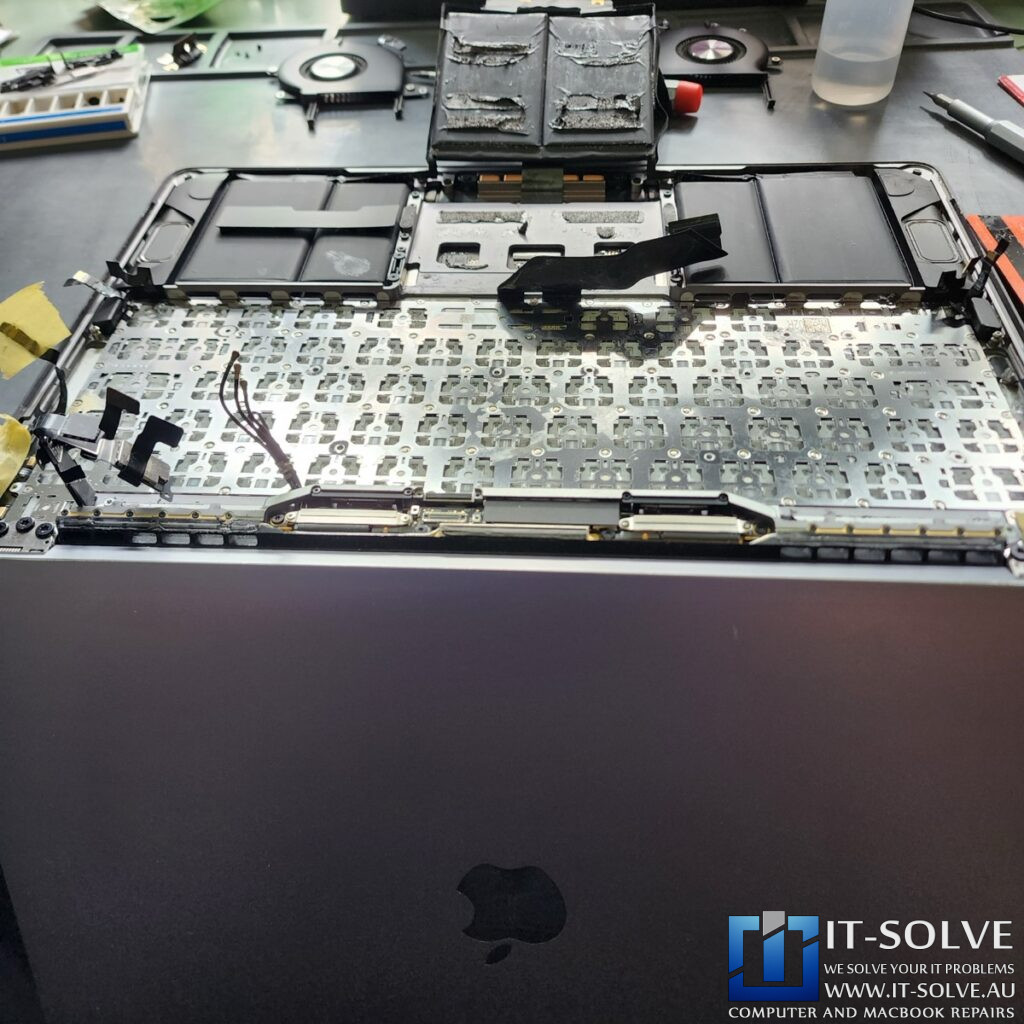
To begin the repair, we completely disassembled the laptop and removed the logic board. Apple designs these machines in a way that makes the keyboard the most difficult component to reach. As a result, our technicians carefully handle the delicate M1 board and its many flex cables. We do this to gain clear access to the underside of the keys without damaging the surrounding electronics.
The Structural Challenge: Removing the Rivets
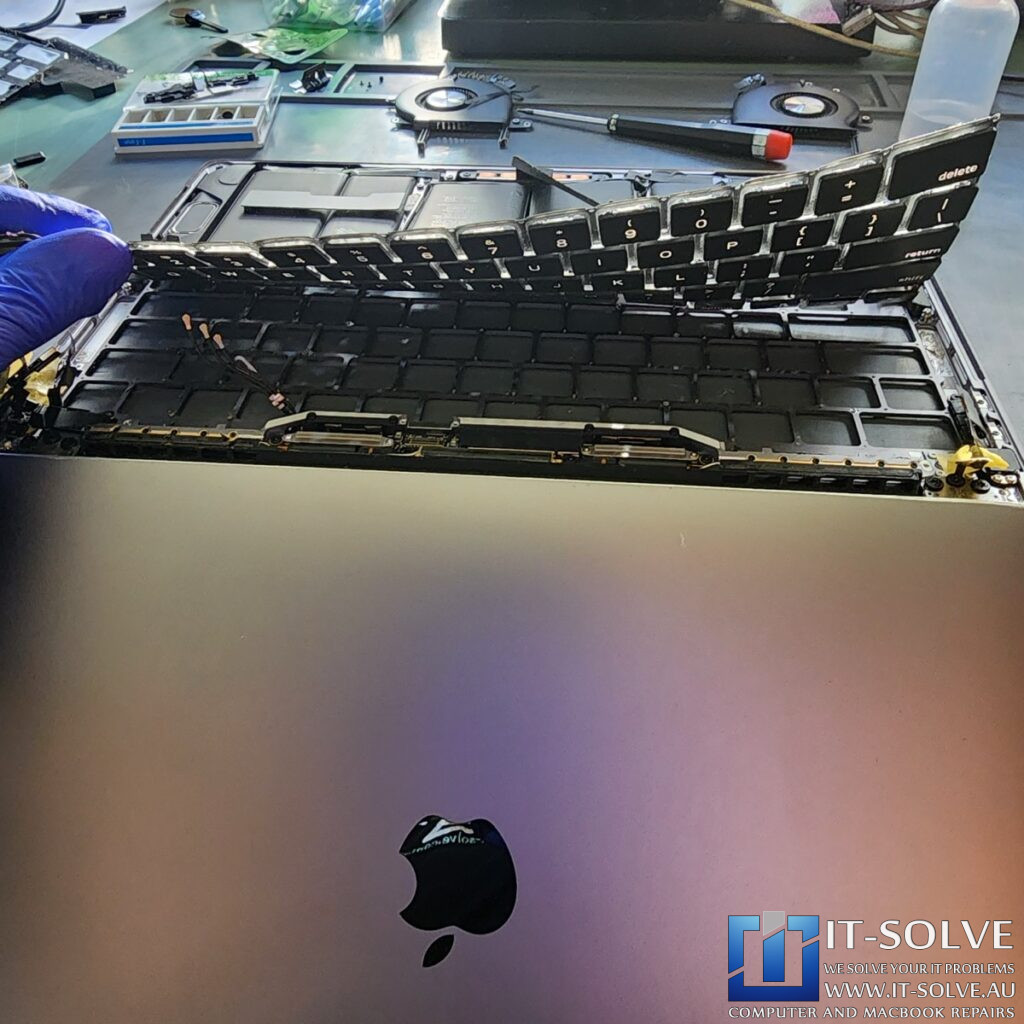
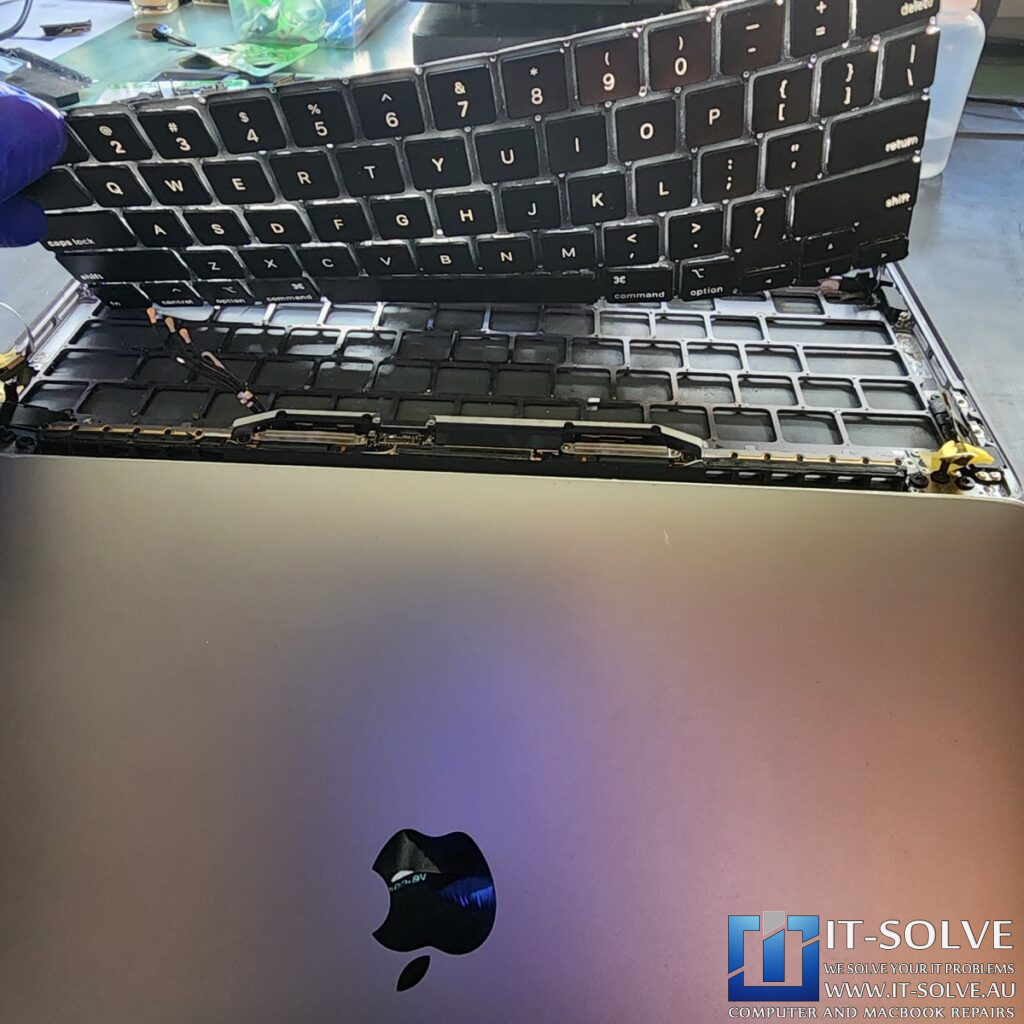
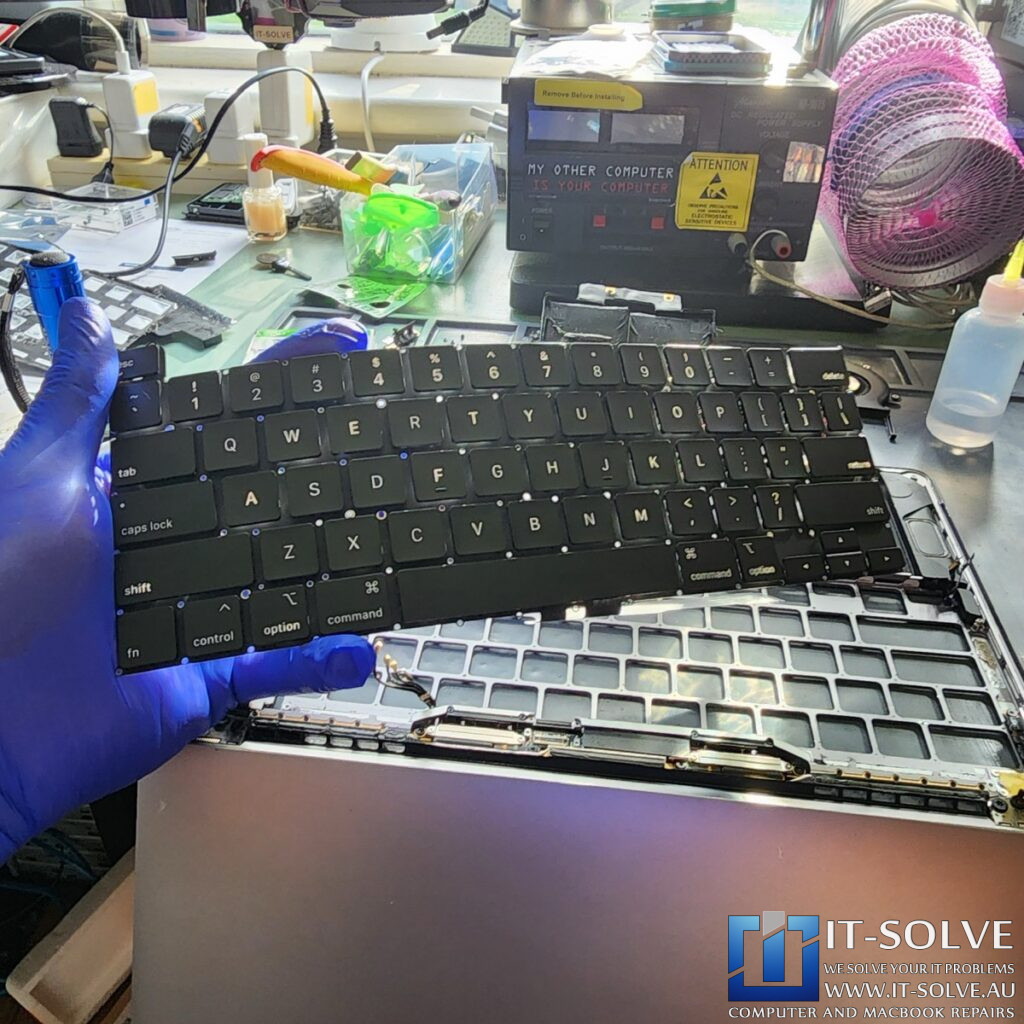
Once we cleared the internals, we encountered hundreds of tiny rivets that hold the keyboard to the aluminum chassis. We meticulously removed these rivets and pulled the failed keyboard out of the frame. Indeed, this MacBook Pro A2337 Keyboard Replacement is not for the faint-hearted, especially since Apple designs these parts to be difficult to replace individually.
Sustainable Repair vs. Whole Case Replacement
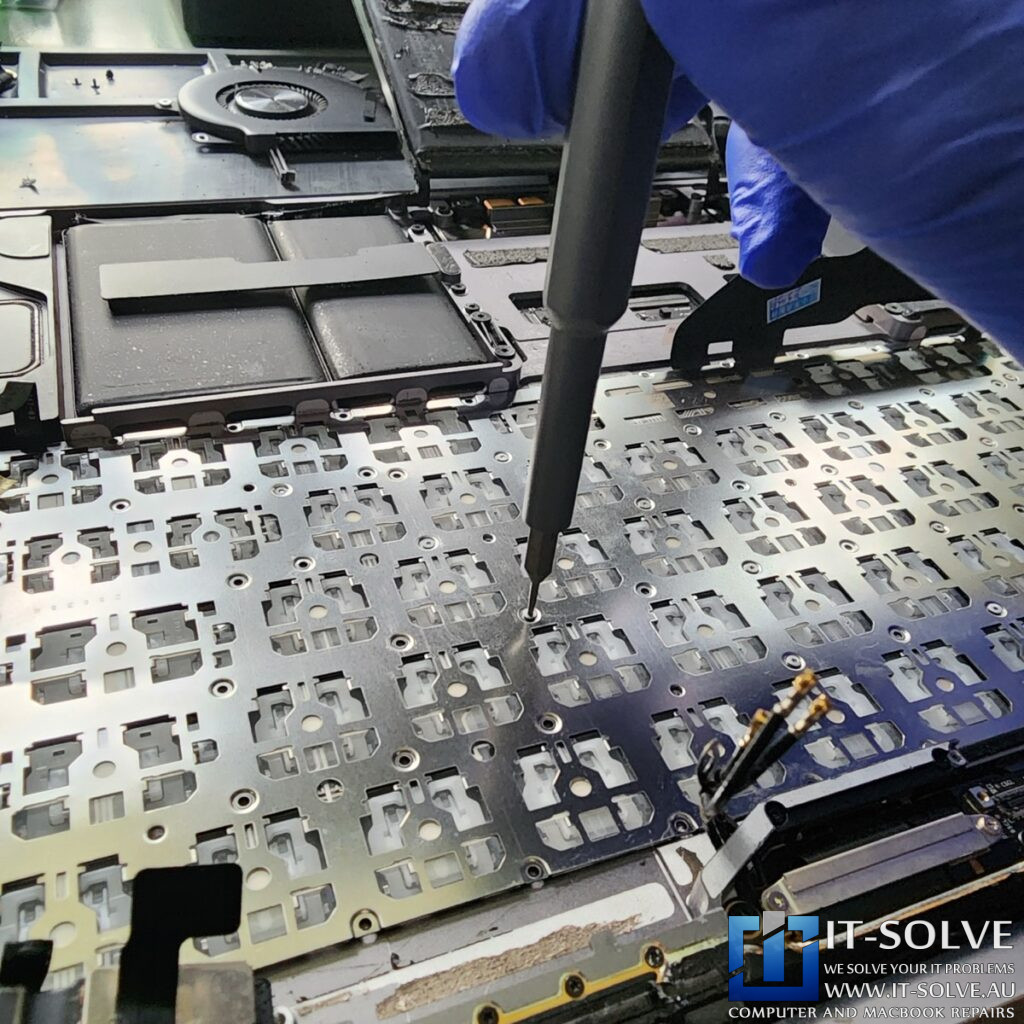
Apple’s official process advises replacing the entire “top case,” which includes the complete aluminum chassis and battery. However, this method wastes precious materials and increases environmental impact. Instead of following that wasteful path, we installed a new keyboard and secured it with tiny screws. This approach significantly reduces the demand for newly mined aluminum and prevents a perfectly good chassis from entering the waste stream.
#itsolverepairs
Final Reassembly and System Testing
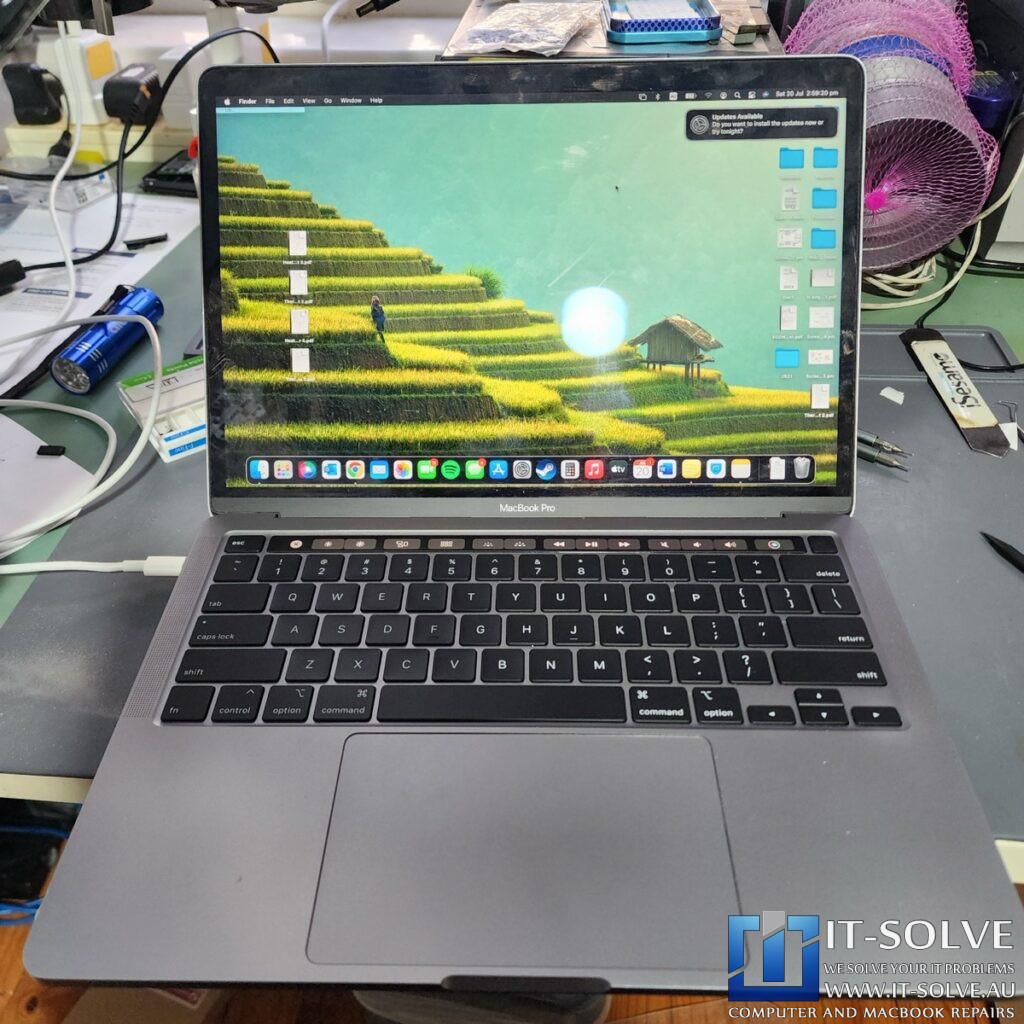
After we secured the new keyboard, we reinstalled the logic board and began the rigorous testing phase. We started the system and verified that every single key — along with the TouchID — functioned perfectly. Furthermore, we checked the rest of the internals to ensure the liquid damage left no residue behind on other critical components.
Moral of the Story: Hidden Risks of Liquid
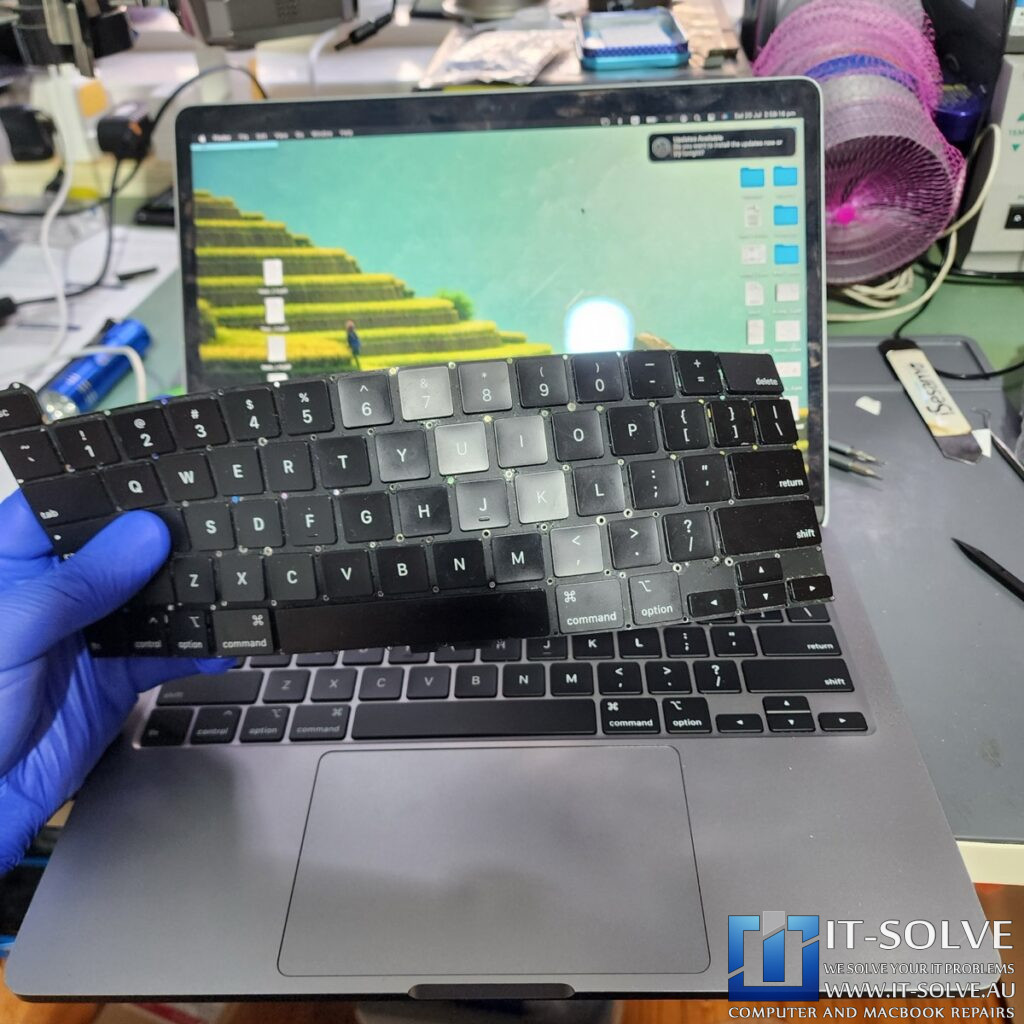
This case proves that even a small spill requires a professional internal inspection. If you leave residue behind, it eventually turns into corrosion and fails the MacBook altogether. Because the keyboard is a capsulated system, we must replace it if even one or two keys fail to type due to oxidation.
Adelaide’s Specialist for Component-Level MacBook Repair
We saved this M1 MacBook from becoming a “top case” replacement statistic by replacing only the failed component. Consequently, if you are struggling with sticky or dead keys, check out our MacBook Keyboard Repair section. We remain proud to provide sustainable and expert repair solutions here in Adelaide!